

A Tale of Two Realities: No Pilled up Zeros in my Rupiah again! 🇮🇩
My recent trip to Jakarta in October 2025 was a delightful experience (as usual), particularly the visit to Remboelan, where my favorite Gurame Bakar and Es Campur Remboelan never disappoint. It was a moment of simple joy, a stark contrast to the life of Evin Lina. The fact that a trip to a well-known establishment like Remboelan was a first-time surprise for a girl in her early 20s immediately hits the point you make: the struggle for rakyat in Indonesia is very real.
Evin's in her story "No Pilled up Zeros in my money again! Indonesia’s Plan to Simplify the Rupiah," is a timely commentary. It expertly dissects the government’s revived plan for Rupiah redenomination, moving beyond the sterile economic arguments to touch on the very human anxieties and fears of the Indonesian populace.

We are enjoying our Gurami in Remboelan, Jakarta.
But, is it necessary? Now? At this point in time? The plan to remove three zeros from the currency (e.g., Rp100,000 becomes Rp100) without changing its actual value is presented by authorities as a move toward greater efficiency and credibility. However, for a commoner like Evin, it raises fears that cut to the core of their daily financial reality.
The Economic Case: Efficiency vs. Urgency
The official arguments for redenomination focus on a range of technical and psychological benefits:
- 📈 Transaction and Accounting Efficiency: Removing the zeroes simplifies accounting, especially for large corporate and government budgets, which currently run into the quadrillions of rupiah. It also makes electronic transactions and record-keeping easier by eliminating the need for systems to handle long strings of digits. This efficiency is projected to reduce running costs for businesses.
- 🌟 Currency Image and Credibility: A simplified currency is seen as enhancing the rupiah's image internationally, making it comparable to currencies in developed nations. This psychological effect aims to signal macroeconomic stability and could bolster investor confidence, which officials argue is vital for attracting foreign capital.
- 📉 Inflation Control Perception: While redenomination does not inherently reduce inflation, successfully executing the change while maintaining stable prices is seen as a powerful statement that the country's central bank (Bank Indonesia) has inflation under control.
However, many economists and critics argue that the plan lacks urgency and carries significant risks, especially given the current global economic uncertainties. As one expert noted, redenomination risks creating an "illusion of stability" that distracts from fundamental issues like corruption, bureaucratic efficiency and the need for structural reforms that truly boost productivity and create jobs.
Impact on the Indonesian Lifestyle and Commoners
For most Indonesian households, particularly those with low financial literacy or who rely on cash, the removal of the zeroes directly impacts their lifestyle through several key concerns:
- 🤯 Confusion and Trust: The biggest lifestyle disruption is the risk of public confusion. For individuals who rely on simple mental arithmetic for daily transactions, suddenly shifting from Rp10,000 to Rp10 can be disorienting. This confusion is compounded by the historical memory of sanering in 1965, where a sudden currency cut did reduce purchasing power, leading to deep public distrust of such monetary changes. The government must embark on a massive, long-term public education campaign to overcome this ingrained fear.
- ⬆️ The Fear of Rounding-Up (Inflationary Shock): This is Evin's most potent fear. While the value remains the same (Rp50,000 = Rp50), there is a significant risk that unscrupulous traders and small businesses will use the transition period to round prices up. A product that costs Rp9,200 might become Rp9.5 in the new currency, which is then rounded up to the nearest new unit, perhaps Rp10. This perceived or real rounding-up could lead to an inflationary spike that hits low-income families the hardest, making essentials like rice or a bus fare suddenly more expensive in real terms.
- 💸 Implementation Costs and Opportunity Cost: The redenomination process involves immense costs: printing new currency, overhauling millions of cash registers, banking software and changing countless price tags and contracts. This expenditure, as critics point out, is an opportunity cost resources diverted from more strategic programs that directly benefit the commoners, such as agricultural subsidies, better healthcare or job-creating infrastructure projects.
- 🚨 Magnifying the Struggle: I will correctly links the redenomination debate to the backdrop of daily struggle, exemplified by the tragic death of the Grab driver in August 2025. In an environment where the economic ground already feels shaky, introducing a complex and costly policy like redenomination can increase anxiety and make people less confident in the government's priorities. It feels like an expensive cosmetic fix when the underlying problems such as high unemployment, low wages and systemic corruption remain unaddressed.
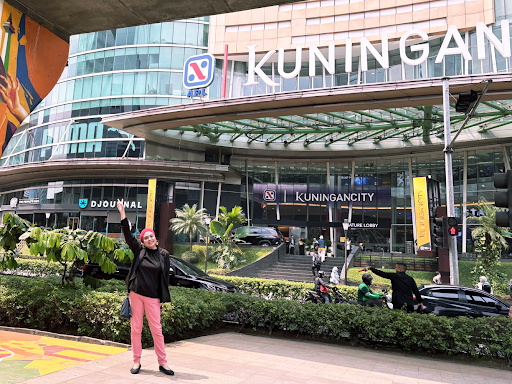
My 'home' in Jakarta i.e. Kuningan Selatan.
Ultimately, while the government sees redenomination as a necessary step toward modernizing Indonesia's financial system and simplifying a visually unwieldy currency, the success of the policy depends entirely on its timing and execution. For me, Evin's concern serves as a vital reminder that for a struggling population, psychological confidence and macroeconomic stability are not just abstract concepts they are the foundation upon which they build their fragile livelihoods.
The struggles reminded me of this statement "My struggle is easier as it expels the invaders, but your struggle will be more difficult as it will be against your own countrymen." – Ir. Soekarno (Indonesia's first President).
Thank you from Money Queen Editorial Team!

Copyright © MQ AI Technology Sdn. Bhd.
All rights reserved.

New webinar available!